

Preparing Your Ottawa Home for New Floors: The Essential Pre-Installation Checklist
May 27, 2026
Sustainable Flooring Options for Eco-Conscious Ottawa Homeowners
June 10, 2026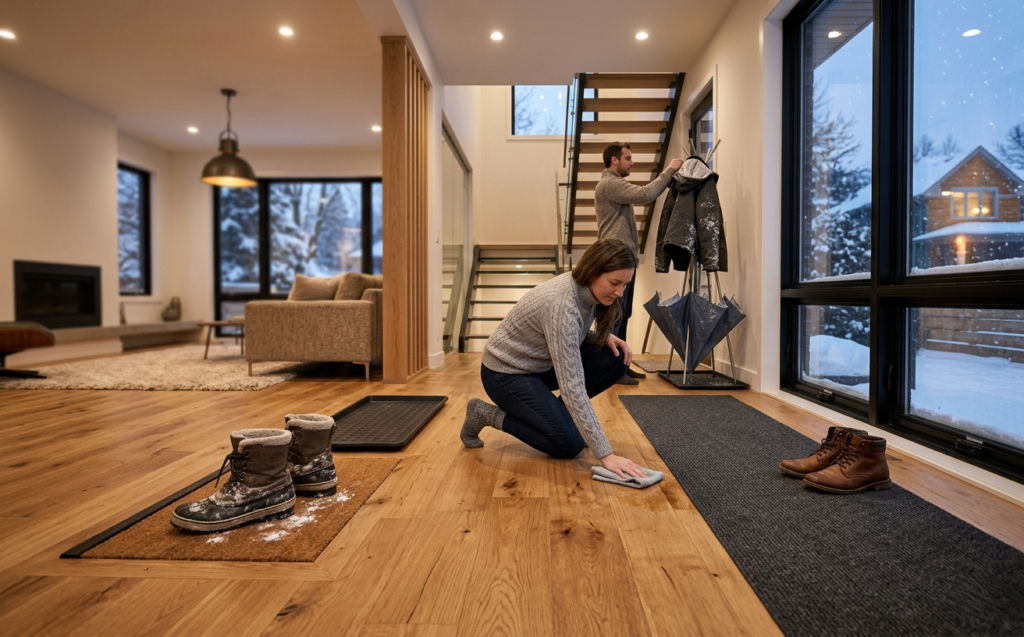
Ottawa’s winters are brutal on flooring. Six months of tracked-in snow, road salt, sand, and fluctuating humidity can undo the beauty of new floors quickly if you’re not proactive. Here’s your seasonal maintenance guide for every flooring type. If you’d like a broader look at how our seasons affect different flooring types, our full ottawa climate flooring guide covers the science behind seasonal wear.
The Winter Enemies of Your Floors
- Road salt (calcium chloride). Leaves white residue, can etch hardwood finishes, and corrodes certain materials.
- Sand and grit. Acts like sandpaper under foot traffic, scratching finishes and wearing surfaces.
- Melting snow and slush. Creates standing water at entryways that damages moisture-sensitive flooring.
- Dry heated air. Drops indoor humidity to 15 to 20%, causing wood floors to gap, crack, and squeak.
Winter Care by Flooring Type
Hardwood and Engineered Hardwood
Both hardwood flooring and engineered hardwood need consistent attention through the heating season to stay looking flawless.
- Run a whole-home humidifier to maintain 35 to 45% relative humidity throughout the heating season
- Place absorbent mats at every entrance. Natural fibre mats with rubber backing work best
- Clean salt residue promptly with a mixture of warm water and a small amount of white vinegar
- Never wet mop hardwood. Use a barely damp microfibre cloth
- Sweep or vacuum daily in high-traffic areas to remove grit before it scratches the finish
- Use manufacturer-approved cleaners only. Avoid oil soaps, wax, and vinegar-heavy solutions
Consistent hardwood maintenance through the winter months prevents most cosmetic issues that lead to premature refinishing.
Luxury Vinyl Plank (LVP)
Modern vinyl flooring is one of the toughest options for Ottawa winters, and waterproof vinyl flooring is particularly forgiving at entryways.
- Sweep or vacuum regularly to remove tracked grit and sand
- Damp mop freely. LVP handles moisture without issue
- Clean salt residue with warm water and a mild cleaner
- Place felt pads under furniture to prevent indentation from winter rearrangements
- Avoid steam mops. Excessive heat can damage adhesives and finishes
Laminate Flooring
Quality laminate flooring handles Ottawa winters well when you stay on top of moisture and grit.
- Address moisture quickly. Even waterproof laminate shouldn’t sit in standing water for extended periods
- Sweep frequently to prevent grit from scratching the melamine surface
- Use a lightly dampened mop. Never soak laminate floors
- Apply manufacturer-approved laminate cleaner for salt and stain removal
Tile Flooring
Porcelain and ceramic ottawa tiles are nearly impervious to winter damage, so most of your effort goes toward grout upkeep.
- Tile surfaces resist salt and moisture, so focus on grout maintenance
- Clean grout lines regularly to prevent salt and dirt buildup
- Reseal grout annually if it’s not epoxy-based
- Use textured mats at entrances for traction on wet tile
Cork and Bamboo Floors
Softer natural surfaces need a gentler winter approach. Cork flooring benefits from sweeping and light damp cloths only, while bamboo flooring should be treated like hardwood: humidity control and prompt cleanup of any moisture are essential.
Essential Winter Floor Protection Setup
The Two-Mat System
Professional flooring installers recommend a two-mat system at every exterior entrance:
- Outdoor scraper mat. Heavy-duty rubber or coir mat to remove snow, ice, and large debris from boots
- Indoor absorbent mat. Large, absorbent textile mat to capture remaining moisture and grit. Choose mats at least 3 feet long for adequate step coverage
Replace or wash indoor mats frequently during heavy winter weather. A saturated mat does more harm than good.
Boot Trays and Waterproof Runners
- Place boot trays at every entrance where wet footwear accumulates
- Use waterproof runners along high-traffic paths from entrances to living areas
- Ensure runners have non-slip backing to prevent sliding and accidents
Humidity Management
Humidity control is the single most important winter maintenance task for wood floors. Ottawa’s dry indoor air is a leading cause of the hardwood moisture problems we see every spring, from board gaps to surface splitting.
- Invest in a whole-home humidifier connected to your HVAC system for consistent humidity
- Monitor humidity with a digital hygrometer placed at floor level
- Target 35 to 45% relative humidity throughout the heating season
- Portable humidifiers supplement in problem areas but can’t replace whole-home systems in Ottawa’s climate
Protect Your Stairs
Stair treads take some of the heaviest winter wear in the home. If your stairs and railings show early signs of finish damage, a light refresh now prevents deeper repairs later.
When Winter Damage Calls for Professional Help
Even with careful upkeep, years of Ottawa winters eventually take their toll. When hardwood floors show scratches, dullness, or salt etching that cleaning can’t fix, professional floor refinishing restores them to their original beauty. For homeowners who want to protect their investment from the start, our team also offers preventive flooring care guidance tailored to each material we install.
For a full walkthrough of what to expect during a refresh, our overview of hardwood floor installation ottawa helps you plan the timing and prep involved.
Visit Our Showroom for Winter-Ready Options
If your current floors are struggling through Ottawa winters, it may be time to consider more climate-resilient materials. Visit our flooring showroom on Colonnade Road to see winter-tough options in person, and browse our our work portfolio for examples of durable installations across Ottawa homes.
Ready to get started? Contact us for the flooring services ottawa homeowners trust, or call Continental Flooring at 613-274-7977 to schedule your free consultation.
