
Stair Renovation in Ottawa: Refinish, Recap or Replace
July 14, 2026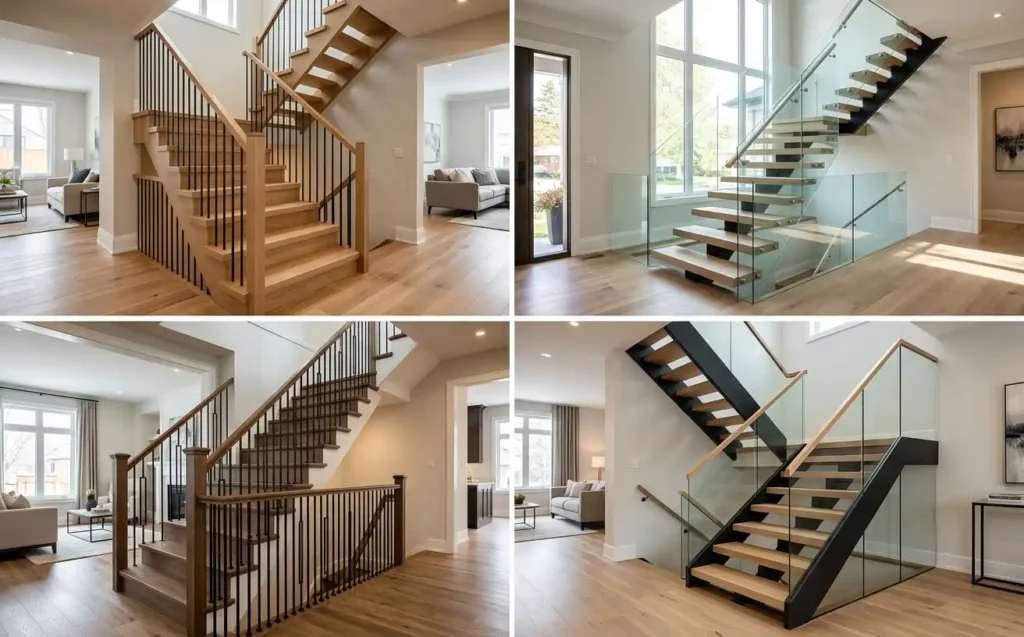
Your staircase sits at the centre of your home, seen from every angle, used every single day, and often the first thing guests notice when they walk through the door. Yet it’s frequently the last element homeowners think about during a renovation, which is a missed opportunity. A thoughtful staircase design can turn a dated hallway into the architectural highlight of your entire main floor, and the right combination of materials will carry that impression for decades.
In Ottawa, where century homes in the Glebe sit alongside new builds in Barrhaven and Kanata, there’s no single correct answer. What works beautifully in a heritage property can feel out of place in an open-concept condo. This guide walks you through the three material families that define modern staircase work so you can find the combination that suits your home and the way you live in it.
The Three Decisions Behind Every Staircase
Before you fall in love with a photo, it helps to understand that a staircase is really three choices stacked together.
The treads and risers are the parts you walk on and the vertical faces between them, and they set the tone while taking the most wear. The railing and balusters fill the space between the handrail and the stringer, doing most of the visual work and carrying all of the safety requirements. The newel posts anchor the assembly at the bottom and at each turn, and they determine whether the whole thing reads as traditional, transitional, or contemporary.
You can mix freely across these three. Some of the most successful projects we build pair warm wood treads with a completely different railing material, and that’s exactly where the interesting decisions begin.
Choosing Your Material Family
Every staircase in an Ottawa home comes down to one of three material families, or some combination of them.
Wood
Wood remains the foundation of most staircase work. It’s warm underfoot, it takes stain and finish beautifully, and it can be refinished rather than replaced. We build stairs in oak, maple, cherry, and ash, so the species question is genuinely open to you.
Oak stairs are the workhorse of Canadian homes. Red oak offers pronounced grain and takes stain readily, while white oak brings a tighter, more contemporary pattern. If you’ve been drawn to white oak flooring in your main living areas, carrying that species onto your stairs creates a flow that makes the whole floor feel larger.
Maple stairs suit homeowners who want something cleaner and more uniform, though maple resists dark stains and can blotch without careful preparation. For something richer, cherry stairs deepen in colour over the years into a warmth no stain reproduces.
Glass
If openness is your priority, nothing else comes close. Glass balustrades replace a row of visual obstructions with a single transparent plane, so sightlines run straight through the staircase instead of stopping at it. In a split-level, or where the stairwell sits beside a window, the difference to how bright the space feels is substantial.
Modern systems use tempered safety glass held either by a slim channel at the base or by individual standoff fittings that make the panels appear to float. The trade-off you’re accepting is fingerprints, since glass shows handprints and will need wiping down in a busy household.
Iron and Metal
Iron sits between the warmth of wood and the transparency of glass. Wrought iron balusters are slim, so they preserve far more sightline than chunky wood spindles while still giving you texture and pattern.
Plain square or round bars in matte black read as clean and contemporary, and they pair exceptionally well with warm wood treads. Scrolled and twisted patterns lean traditional and suit century homes with ornate trim. Brushed or satin finishes offer a softer, more industrial feel. Whichever profile you choose, iron won’t dent when furniture goes upstairs and won’t loosen the way wooden spindles do over an Ottawa winter.
Combinations That Consistently Work
The strongest designs rarely commit to a single material, and a few pairings turn up again and again in Ottawa homes.
- Warm oak treads with matte black iron balusters and an oak handrail, which is timeless and suits almost any style of house.
- White oak treads with glass panels and a slim metal cap rail, ideal for open-concept main floors.
- Painted white risers with stained wood treads and iron balusters, a crisp classic in heritage properties.
- Wood treads with a mixed glass and metal system on the upper landing only, which keeps cost down while opening up the most visible run.
You’re not obligated to make every run in your home identical. A basement staircase can be simpler and more practical while your main staircase carries the design weight, much the way you’d select best flooring for basements on entirely different criteria than the floors upstairs.
Matching Your Stairs to Your Floors
One of the most common questions we hear is whether stairs need to match the surrounding floors exactly. They don’t, but the relationship should feel deliberate. A close match creates continuity, while a contrast such as darker treads against lighter floors defines the staircase as its own element. What you want to avoid is the accidental near-miss, where two similar but not-quite-matching tones sit side by side and simply look like an error.
If your existing hardwood is sound but your stairs are tired, staircase refinishing is often the smarter path. Sanding and restaining treads brings them back in line with your floors at a fraction of the cost of rebuilding.
Plenty of Ottawa families still prefer carpeted stairs, particularly where bedrooms sit below a staircase and footfall noise carries. A runner over stained treads gives you the best of both, exposing wood at the edges while softening the walking surface.
Code, Traffic, and Sequencing
Building codes govern staircases more tightly than almost any other interior element. Baluster spacing, handrail height, tread depth, and riser height all carry requirements, and any custom staircase work needs to respect them. Professional stair railing installation protects you both from safety issues and from problems at resale.
Think about traffic too. If your staircase is the main route between kitchen and bedrooms, it absorbs enormous daily wear, and a harder species with a durable finish pays for itself there.
Finally, sequence the work sensibly. If you’re already planning a floor installation or weighing different flooring types for the surrounding rooms, plan the staircase at the same time. Ordering matching material in one run is cheaper and produces a far more cohesive result than trying to match a stain two years later.
Keeping Your Staircase Looking New
Treads take more abrasion per square foot than any other surface in your house, so the finish there works harder than it does anywhere else. Regular hardwood floor care is simple, but it matters more on stairs than on open floor.
Keep grit off the treads, since that’s what actually wears a finish down. Wipe rather than soak when you clean. If you’ve gone with glass, expect to clean the panels more often than you’d expect, and if you’ve chosen iron, dusting the balusters is essentially the whole maintenance programme.
Hold the Materials Before You Choose Them
An iron baluster’s weight, the way a handrail sits in your palm, the way a stain tone shifts between showroom light and your own hallway: none of it survives a photograph.
Visit our flooring showroom on Colonnade Road to see wood species, railing systems, and hardware side by side, browse our room scenes gallery for design inspiration, and review our our work portfolio for completed Ottawa staircases. If you want tread material that stays stable through our humidity swings, our engineered hardwood collections are worth a close look.
Ready to get started? Reach out for the flooring services ottawa homeowners trust, or call 613-274-7977 to schedule your free consultation.
