

Carpeted Stairs vs. Hardwood Stairs: An Ottawa Comparison Guide
July 14, 2026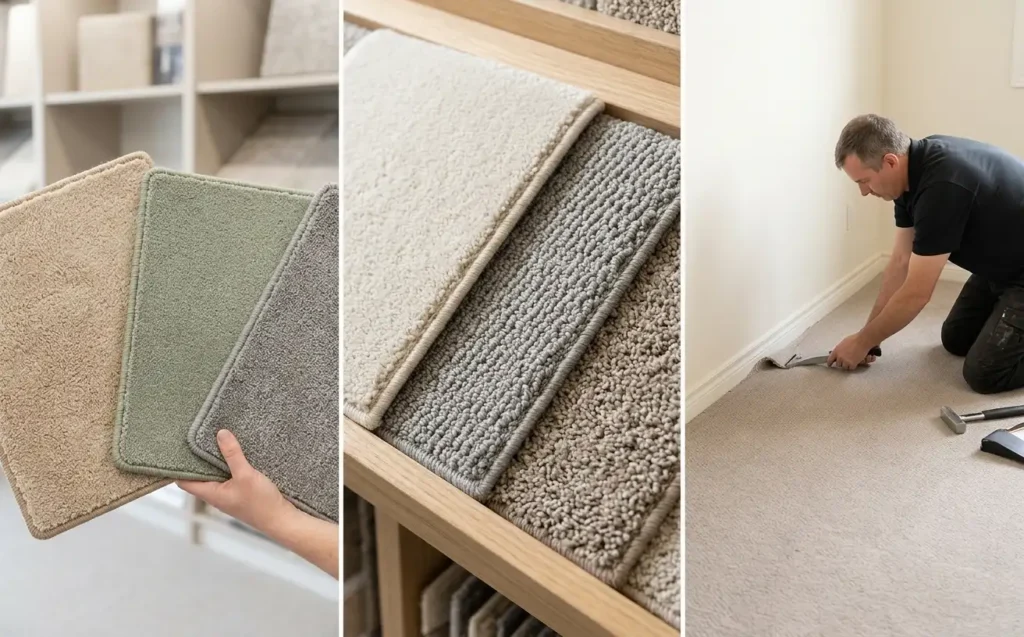
Carpet buying is one of those decisions where almost everyone focuses on colour and nobody asks about the construction underneath. The showroom roll looks beautiful, the swatch feels soft on your hand, you pick a shade, and three years later the traffic lane is matted flat and you can’t understand why.
The appearance is the easy part. The specifications that actually determine how long a carpet lasts and how it feels to live on are the fibre, the pile, the density, and the padding beneath it. Get those right and even a modest carpet looks good for years. Get them wrong and the most beautiful carpet in the showroom disappoints by the second winter.
This guide sets out how to choose carpet flooring for an Ottawa home, from fibre selection through installation, so you buy once and buy well.
Where Carpet Still Earns Its Place
Carpet has lost ground to hard surfaces across the past decade, and some of that was overdue. But there are rooms where carpet is still the right answer, and it’s worth being clear about them.
Bedrooms are the obvious case. Warm underfoot in the morning, quiet, soft on bare feet, and forgiving to a child who falls out of bed. Nothing else does this quite as well.
Family rooms where people actually sprawl on the floor still argue for carpet. Basements that aren’t moisture-prone, provided the slab is properly sealed. Stairs, where carpet absorbs sound and gives footing in a way bare wood can’t match without a runner. And media rooms, where the acoustic absorption makes a measurable difference.
If you’re deciding between carpet and hardwood for a specific room, our comparison of different flooring types sets out the full range, and our dedicated piece on carpeted stairs vs hardwood stairs covers the stair-specific decision.
The Fibre Decides Almost Everything
Four fibres cover almost every residential carpet on the market, and the choice between them governs how long the carpet lasts, how it cleans, and how it feels.
Nylon
The workhorse of residential carpet. Nylon is durable, resilient, takes dye beautifully, and springs back after compression better than any other synthetic. It’s what you want in a hallway, a stair, a family room, or any space that takes real traffic.
The downside is cost. Quality nylon costs more than polyester or olefin, and the price difference buys you years of life. In a bedroom where traffic is light, nylon may be overspecified. In a stair runner, it earns every dollar.
Polyester (PET)
Polyester has improved dramatically, especially PET made from recycled plastic bottles. It takes rich, saturated colours well, feels soft underfoot, and resists staining because the fibre itself doesn’t absorb water.
What it doesn’t do as well is bounce back from compression. In a traffic lane, polyester mats faster than nylon, and once it mats, it stays matted. For bedrooms and low-traffic rooms where the softness and colour range matter more than long-term resilience, polyester is often the smart choice.
Olefin (Polypropylene)
Olefin is the budget workhorse. It’s inexpensive, it’s extremely stain-resistant, and it dries quickly, which makes it the default for Berber carpet, outdoor carpet, and some basement installations.
The trade-off is appearance over time. Olefin crushes under traffic and doesn’t recover, and it attracts oily soil. In a looped Berber pattern, where the loops support each other, it holds up reasonably. In a cut-pile construction, it looks tired fast.
Wool
The premium answer, and still the standard other fibres are measured against. Wool is naturally resilient, inherently flame-resistant, naturally hides soil, and takes colour with a depth no synthetic quite matches.
It costs considerably more, it needs more careful cleaning, and it can be damaged by harsh chemicals. In a formal room, a bedroom you’ll use for twenty years, or a stair you want to look right for a lifetime, wool is a genuine investment. In a basement rec room, it’s the wrong fibre.
Pile: How the Fibre Is Constructed
Fibre is only half the story. How that fibre is attached to the backing and finished at the top of the carpet changes everything about how it looks and performs.
Cut Pile
Loops of fibre are cut at the top, creating individual tufts standing upright. This is the familiar soft carpet most homes have, and within cut pile there are several variations.
- Plush: dense, uniform, velvety. Shows footprints and vacuum lines. Elegant in a formal space, less forgiving in a family room.
- Textured: twisted fibres that break up the surface and hide footprints and vacuum marks. The default for most Ottawa family homes for good reason.
- Frieze: tightly twisted fibres that create a casual, nubby surface. Hides traffic patterns extremely well and suits busy households.
- Saxony: a more formal cut-pile where fibres stand straight up. Beautiful in low-traffic rooms, shows wear quickly in high-traffic ones.
Loop Pile
The loops aren’t cut. The surface reads as a series of small loops rather than cut tufts.
- Berber: large, visible loops in a flecked pattern. Durable, hides soil, and classic in basements and family rooms. The downside is that a pet claw can catch a loop and pull a run across the carpet.
- Level loop: uniform small loops, extremely durable, and the standard in commercial settings and busy residential ones.
Cut and Loop
A mix of cut and loop sections in the same carpet, creating patterns and texture. More decorative, slightly more complex to clean around, and useful where you want visual interest without a printed pattern.
Density: The Spec Almost Nobody Reads
Density is how tightly packed the fibres are in the carpet, and it’s the single best predictor of how a carpet will wear. A dense carpet feels firm when you press your palm into it. A loose one gives easily, and the backing is close to the surface.
Density matters because a dense carpet distributes foot pressure across many fibres, while a loose one concentrates it on few. Dense carpets hold their shape, resist matting, and vacuum cleaner better. Loose carpets go flat.
The showroom test is simple: bend a sample sharply backwards. If you can easily see the backing through the fibres, the density is low. If the fibres stay packed together with the backing hidden, the density is good. Ask the salesperson for the density rating; a reputable seller knows it.
Padding: The Invisible Half of the Decision
The pad beneath the carpet determines comfort, longevity, and sound insulation, and almost nobody thinks about it until the installation is scheduled.
Pad is specified by thickness and density. Thicker isn’t automatically better: too thick and the carpet flexes excessively, which actually accelerates wear at the backing. Too thin and you feel the subfloor through the carpet.
For most residential installations, a mid-weight pad in the 7 to 10 pound density range works well. In basements, a moisture-resistant pad with a vapour barrier is essential. On stairs, use a firmer, thinner pad than you would on flat floor, because thick pad on stairs flexes dangerously at the nosing.
Our guide to best flooring for basements covers whether carpet belongs in your basement at all, which depends on moisture conditions before anything else.
Measuring and Seams: Planning Before Buying
Carpet comes on rolls, usually 12 feet wide, and the way your rooms break against that width determines how much you buy and where the seams land.
A room 11 feet wide takes one strip across its width with waste. A room 13 feet wide takes a strip of carpet plus a seam. That seam has to go somewhere, and planning where decides whether you’ll notice it every day or never see it.
Seams want to run with the light rather than against it, to sit away from main traffic paths, and to land under furniture where possible. A good installer plans this before cutting, and the planning is part of what you’re paying for.
Our pre-installation checklist covers how to prepare the rooms before installation day, and the practical steps make a measurable difference to how the job runs.
Installation Is Where Cheap Carpet Fails
Carpet installation looks straightforward and isn’t. The carpet is stretched across the room using tackless strips at the perimeter, which are strips of wood with angled pins that grip the backing. The stretch is created with a knee kicker and a power stretcher, and getting the tension right is what prevents ripples, waves, and bubbles later.
Under-stretched carpet develops ripples within a year, and the fix is restretching the whole room. Over-stretched carpet damages the backing. Correctly stretched carpet lies flat for the full life of the floor.
Seams are heat-sealed with seam tape and a seaming iron. A well-made seam is invisible from a metre away. A poorly made one shows for the life of the carpet.
This is one place where professional flooring installation genuinely matters. Our full floor installation service covers carpet alongside every other material.
Stairs Are a Separate Craft
Stairs ask more of carpet installation than any other surface in the house, and they’re where installers earn their reputations.
Each tread and riser is a separate piece, the carpet has to wrap the nosing cleanly without bulges, and the pad has to be fitted so there’s no give at the step edge. Carpet runners over hardwood add another layer of complexity, with the runner needing to be centred, straight, and tacked without the hardware showing.
Our stairs and railings service covers stair carpet installation as well as hardwood treads and the railings above them.
Living with New Carpet
Carpet asks for more routine maintenance than hard surfaces, and most of what shortens its life is avoidable.
Vacuum regularly, because the grit tracked in on shoes acts like sandpaper on the fibres at the base. Deal with spills immediately: fresh is far easier than set, and most stains that look permanent would have come out if addressed within the hour.
Have the carpet professionally cleaned every 12 to 18 months. This isn’t optional. Dirt the vacuum can’t reach gradually breaks down the fibres and the backing, and periodic deep cleaning is what carpet manufacturers assume you’ll do when they warranty their products.
Our Ottawa-specific guidance on winter floor maintenance covers how to protect carpet from the salt, slush, and grit that arrive from November through April. For pet households, our guide to pet friendly flooring options covers which carpet constructions handle animals best.
When to Replace Rather Than Clean
Carpet has a finite life, and knowing when to replace it saves money across a decade.
Matted traffic lanes that don’t recover after cleaning mean the fibres have given up, and no amount of further cleaning will bring them back. Visible seams that have come apart, backing showing through worn areas, and persistent odours that cleaning doesn’t resolve all point to replacement rather than restoration.
Our the ultimate guide to carpet flooring in ottawa covers the full lifecycle from selection to retirement, and when the old carpet needs to come out, our piece on what you need to know about carpet removal walks through the process.
See Carpet at Full Scale, Not on a Swatch
A six-inch swatch is the worst possible way to judge a carpet. The pattern that reads subtle on a sample reads busy across an entire room, and the colour that looked warm in showroom light reads different under your north-facing bedroom window.
Visit our flooring showroom on Colonnade Road to see carpet at larger scale, feel it under your hand, and compare constructions side by side. Browse our room scenes gallery for design inspiration and review our our work portfolio for installed carpet.
Thinking about new carpet? Contact our carpet specialists or call 613-274-7977 to arrange a free measure and quote at your home.
