
Kitchen Tile Ideas for Ottawa Homes: Choosing the Right Material
August 17, 2026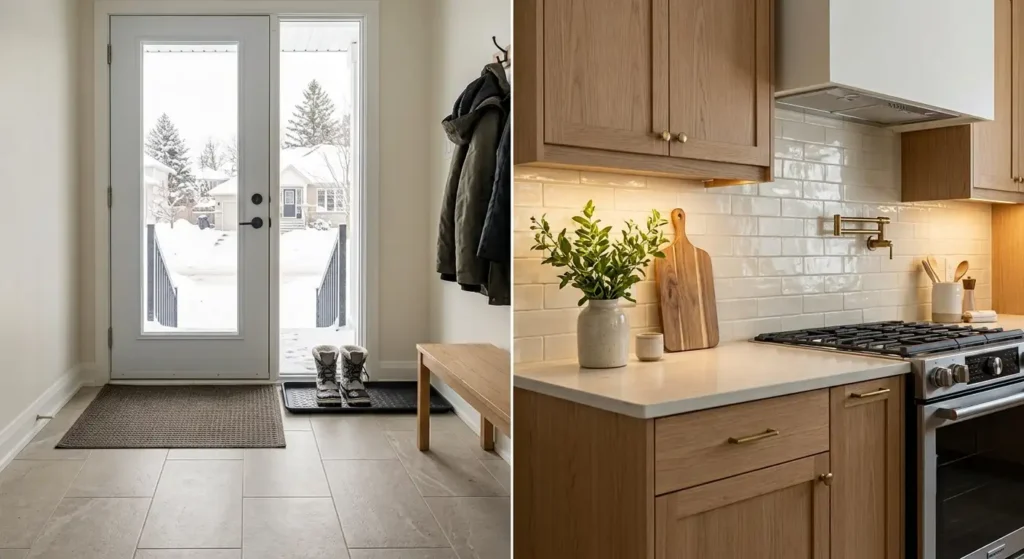
Walk into any tile showroom and the two words come at you immediately. Porcelain here, ceramic there, often sitting side by side, frequently looking almost identical, and priced differently enough that you know something must separate them. Ask which is better and you’ll usually get a shrug and a “depends what you need it for,” which is technically correct and completely unhelpful.
The honest answer is that they’re closely related, that the difference is real but narrower than the marketing suggests, and that for most rooms in most Ottawa homes either one will serve you well. Where the distinction matters is in a handful of specific situations, and knowing which ones they are turns a confusing choice into an easy one.
What Actually Separates Them
Both materials are clay, fired at high temperature, which is why they look so similar. The difference comes down to the clay and the firing.
Porcelain tile is made from a finer, denser clay, fired hotter and longer. The result absorbs almost no water, technically under half a percent by weight. Ceramic uses a more porous clay body fired at lower temperatures, and it absorbs more, typically somewhere between three and seven percent.
That single property drives nearly everything else. Denser means harder, and harder means more resistant to chipping, scratching, and cracking. Less porous means better in wet areas. It also means heavier, harder to cut, and more expensive.
Ceramic gives up some of that density and gets things back in return. It costs less, it’s easier to work with, and because the clay body is more forgiving, manufacturers can push further on colour, texture, and surface pattern. Modern ceramic designs are nearly identical to natural marble and other natural products, which is why some of the most striking tiles you’ll see are ceramic rather than porcelain.
Where Porcelain Earns Its Premium
There are rooms where the extra density pays for itself, and in Ottawa there are more of them than you might expect.
Entryways and Mudrooms
This is the strongest case for porcelain. Your front hall in February takes slush, road salt, grit, and standing meltwater every single day for months, which is a punishing environment for any floor.
Porcelain’s near-zero absorption means water sits on top and gets wiped away rather than working into the tile body, and its hardness handles the grit that arrives on boots. If you’re only going to spend on porcelain in one room, make it the room where winter walks through the door.
Bathrooms and Wet Areas
Moisture is constant, and porcelain handles it better. Around a shower, on a bathroom floor, or anywhere that sees standing water, that density is doing real work. Textured surfaces are particularly worth seeking out here, since they’re both water and slip-resistant.
Basements
Basement slabs carry moisture up from the ground continuously, and a low-absorption tile is far more tolerant of that than a porous one. Porcelain is the version of tile that belongs below grade, and it sits alongside LVP as one of the two moisture-proof options. Our guide to the best flooring for basements covers the full range.
High-Traffic Floors
Any room that takes constant footfall, whether that’s a busy kitchen or a hallway everything funnels through, benefits from the harder surface. The wear is slow either way, but porcelain is slower.
Where Ceramic Is the Smarter Choice
Ceramic isn’t the budget compromise it’s sometimes made out to be, and it’s the right answer in plenty of rooms.
Nothing walks on a backsplash. There’s no abrasion, no impact, and no standing water beyond the occasional splash, so porcelain’s advantages simply don’t apply and you’d be paying for durability the location will never test. Ceramic tile is also lighter, which matters on a vertical surface, and it gives you far more decorative range for the money.
Where the tile is the feature of a room, ceramic usually offers more to choose from. The glaze range is broader, and the ability to imitate natural materials convincingly means you can get a marble look without marble’s fragility.
And in a powder room, a laundry area, or a guest bathroom that sees light use, neither material will be meaningfully stressed. The money you save there is real.
What You’re Actually Paying For
Porcelain typically costs more per square foot, and the gap widens once installation is included. Porcelain is denser, so cutting takes longer and consumes more blades, and it’s heavier, so handling is slower.
The temptation is to see the higher figure and default to ceramic across the whole house, which is usually the wrong instinct. The right approach is almost never one material everywhere. Porcelain in the entryway and the bathrooms, ceramic on the backsplash and in the powder room, and you’ve spent your money where it does something rather than spreading it evenly across rooms with very different demands.
Professional tile installation matters more with tile than with almost any other flooring. Substrate preparation, correct adhesive, proper spacing, and consistent grout lines determine whether your floor lasts thirty years or starts lifting in three.
How Tile Compares to Everything Else
If you’re still weighing tile against the alternatives, the honest framing is that tile is the hardest, longest-lasting, most water-tolerant surface available, and it’s also the coldest and least forgiving underfoot.
That trade-off is why so many Ottawa homeowners look at luxury vinyl flooring for the same rooms. Vinyl is warmer, softer, quieter, and fully waterproof, and it has closed much of the appearance gap. What it doesn’t match is tile’s lifespan or its resistance to heat, scratching, and heavy impact.
Where you want the warmth of wood, tile isn’t the answer at all, and different flooring types exist precisely because no single material wins everywhere.
Living with a Tile Floor
Tile is the least demanding floor you can own, and most of the maintenance conversation is really about grout.
Sweep and mop as you would any hard surface. Grout is the porous part, so it stains where the tile doesn’t, and a mid-tone grout in a busy room saves you a great deal of scrubbing. Sealing the grout on installation and resealing it periodically keeps it looking deliberate.
Beyond that, tile asks for almost nothing. It doesn’t scratch under chair legs, it doesn’t mind a dropped pan, and it doesn’t care about a spill you didn’t notice for a day.
Pick Up Both Before You Choose
Porcelain and ceramic can look completely identical in a photograph and feel entirely different in your hand. The surface texture that decides whether a tile is slip-resistant enough for your front hall is something you can only judge by touching it.
Visit our flooring showroom on Colonnade Road to compare both materials directly, in the sizes and finishes you’re actually considering, browse our room scenes gallery, and review our our work portfolio for finished tile floors. Tell us which rooms you’re tiling and we’ll tell you honestly where porcelain is worth it and where it isn’t.
Ready to get started? Reach out for the flooring services ottawa homeowners trust, or call 613-274-7977 to schedule your free consultation.
