
Iron Railings for Ottawa Staircases: Classic and Modern Styles
August 10, 2026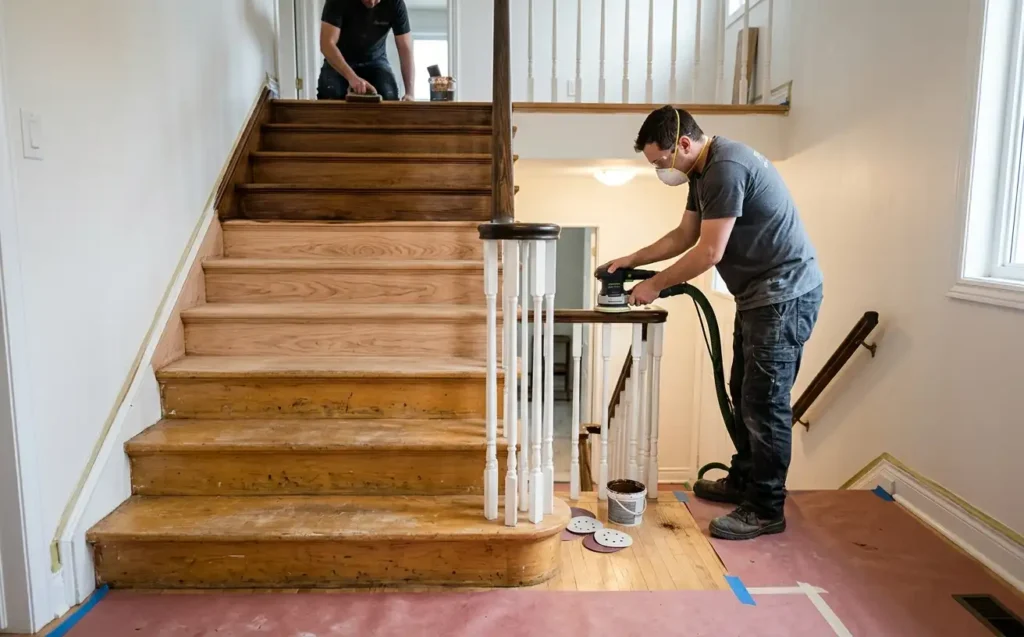
There’s a particular kind of staircase that shows up in Ottawa homes again and again. The wood underneath is perfectly sound, often oak or maple laid decades ago by someone who knew what they were doing, but the finish has given up. Traffic has worn a pale stripe down the centre of every tread, the nosings have gone grey, and the whole thing reads as tired even though nothing is actually wrong with it.
That staircase doesn’t need replacing. It needs staircase refinishing, and the difference in cost between the two is enormous. Refinishing takes what you already have and makes it new again, and on stairs the transformation tends to be more dramatic than anywhere else in the house, because the wear was more concentrated to begin with.
What Refinishing Actually Is
Refinishing means removing the existing finish, preparing the bare wood, and applying new stain and protective coats. The wood itself stays, and you’re replacing the surface layer rather than the material.
Sanding and refinishing is worth exploring as a less expensive alternative to laying down a new hardwood flooring installation, and the same logic applies to a staircase. We refinish oak, maple, birch, parquet, and pine surfaces across the city, and stairs are simply a more demanding version of the same job.
It works because hardwood is thicker than it needs to be. There’s material above the tongue on every board, and on a stair tread there’s more still, and that surplus is what lets you sand back to fresh wood and start over, several times across the life of a staircase.
Why Stairs Cost More Than Floors
An open floor is a flat plane, and a large drum sander crosses it efficiently. A staircase is nothing like that.
Every tread is a separate small surface with a nosed front edge. Every riser is a vertical face. There are inside corners where tread meets riser, outside corners at the nosing, and the whole assembly is interrupted by balusters running straight through it. None of that can be done with a large machine, so most of the work happens by hand or with small edge tools, moving one step at a time.
The labour per square foot runs considerably higher than on flat floors, and any quote that treats your stairs as if they were floor area is a quote from someone who hasn’t done many staircases.
The balusters are the other complication. If they’re staying, every one has to be worked around, with sanding reaching right up to the base of each without damaging it. Where balusters are being replaced anyway, refinishing gets markedly easier, which is why the two jobs are so often paired with a broader stairs and railings update.
The Four Stages
Each stage has a different job, and each one has a way of going wrong.
Assessment and Repair
Before anything starts, the treads get checked. Are they solid hardwood or carpet-grade lumber? How many times has the staircase been refinished before? Is there enough material left to sand? Are any treads cracked, loose, or squeaking?
Squeaks and loose treads get fixed first, because refinishing over a problem leaves you with a beautiful staircase that still creaks. Protruding nails come out. All repairs happen before sanding begins, and this is where broader floor repair work often gets folded into the project.
Sanding
The old finish comes off through progressively finer abrasives, with the first pass taking the wood back to bare and subsequent passes removing the scratch pattern left by the one before.
This is the stage that can’t be rushed. Skipping a grit to save an hour produces sanding marks that are invisible under work lights and obvious the first time afternoon sun catches the treads at an angle. On stairs, where every tread catches light differently, that mistake shows more than it would on a floor. Careful hardwood floor sanding is what separates a professional job from a passable one.
A sandless approach also exists, and where the finish is worn but the wood beneath is sound it restores the surface with far less disruption and at lower cost. Ask about it rather than assuming a full sand is necessary.
Staining
Once the wood is bare, stain goes on, and this is where you decide whether the staircase matches your floors, contrasts with them, or changes character entirely.
Different colour stains can give your stairs many new years of lasting beauty, and the range is wider than most homeowners expect. Species matters here, since the same stain reads differently on oak than on maple, and maple in particular can blotch under dark stains without careful preparation. If you’re considering matching your treads to premium oak hardwood flooring elsewhere in the home, it’s worth planning both jobs together.
Ask for test patches on the actual treads before committing. A stain that looked right on a sample board can look entirely wrong on your own staircase, under your own light, against your own walls.
Finishing
Protective coats go on over the stain, usually two or three, with light abrading between them. Waterborne finishes dry faster and carry far less odour, which matters a great deal when the staircase is the only route to the bedrooms. Oil-based finishes take longer and carry an amber tone that deepens over time.
How Long You’ll Be Living Around It
Sanding a staircase is fast, and a typical straight run can be sanded in a day. What extends the project is everything after.
Stain needs time to absorb and dry before finish goes on, usually a day. Each finish coat needs drying time. And then there’s cure time, which is the part homeowners consistently underestimate.
Your refinished staircase will be walkable long before it’s fully cured, and walking on it too early, particularly in shoes or with pets, marks a finish that hasn’t hardened. Plan for the stairs to be out of normal use for several days, and be realistic about what that means in a two-storey house where they’re the only way up.
That logistical problem is the single biggest reason to plan properly. Where you can, refinishing stairs alongside a broader hardwood floor restoration project makes sense, because you’re already living around the disruption. Our pre-installation checklist covers how to prepare the space and what to arrange before the crew arrives.
When Refinishing Isn’t the Answer
Refinishing has limits, and a good contractor will tell you when you’ve hit them.
If your treads are construction-grade pine or plywood that was always meant to live under carpet, there’s nothing worth refinishing, and recapping with new hardwood is the route instead. A full stair renovation covers those options.
If the staircase has been refinished several times already, there may not be enough material left, and sanding into the tongue on a tread is the end of the line.
And if treads are cracked, if stringers have failed, or if the staircase moves when you climb it, sanding just produces a smooth surface over a structural problem. Knowing the signs replace hardwood floors rather than refinish them saves you from spending money twice.
Making the Finish Last
Treads take more abrasion per square foot than any other surface in the house, so what you do afterward matters more here than on open floor.
Keep grit off them, since that’s what actually wears a finish down. Clean without soaking. Consider a runner if your staircase is the main route between kitchen and bedrooms, because it takes the traffic while leaving the wood visible at the edges. Consistent hardwood floor care is the difference between refinishing again in eight years and refinishing again in twenty.
Ottawa’s harsh winters and dry indoor heat put extra stress on refinished treads, and our guide to winter floor maintenance walks through the seasonal habits that protect your finish through the worst months.
Let Us Look at Your Treads First
Tread thickness, refinishing history, species, and whether the damage is cosmetic or structural all change the recommendation, and none of it shows up in a photograph.
We can tell you in a short visit whether your staircase needs a full sand, a sandless restoration, or something more substantial, and we’ll tell you plainly if refinishing isn’t the right answer. Visit our flooring showroom on Colonnade Road to see stain options on real wood, browse our room scenes gallery, and review our our work portfolio for restored staircases.
Ready to get started? Reach out for the flooring services ottawa homeowners trust, or call 613-274-7977 to schedule your free consultation.
